


Buying a house without building regulations approval comes with a number of inherent risks and potential liabilities which you need to be aware of before you proceed. Ideally, any house you buy would have full building regulation approval to avoid legal and financial risks.
That said, you might benefit from lower purchase prices on a house which is otherwise perfect for you. If you’re in this boat, it’s important to understand why building regulations are important, and how to safely buy a house which doesn’t have approval.
Why building regulations are important

Building regulations are vital standards which ensure residential properties are safe and healthy to live in. They cover aspects such as structure stability, fire safety, sanitation, electrical safety and accessibility where it’s required.
It is possible to buy a house or obtain a variety of mortgage types on a property without regulation approval, but many lenders will be apprehensive about loaning you money because their loan security is at risk.
Building regulations approval vs planning permission
It is important to understand the difference between planning permission and building regulations.
Planning permission generally focuses on how a property looks and its impact on the local area, such as whether an extension fits the character of the street.
On the other hand, building regulations focus on the technical safety and structural integrity of the home itself. This ensures that work like electrical wiring or load-bearing walls is safe and energy-efficient.
When is a building regulations certificate issued?
A building regulations certificate is issued after any construction or renovation work is completed. Following completion, local authority building control should inspect any work, to check compliance with many regulations and overall safety.
It’s important to note that this is not an automated process; inspections must be requested either through the local authority or with a private inspection company.
The risks of buying a house without building regulations approval
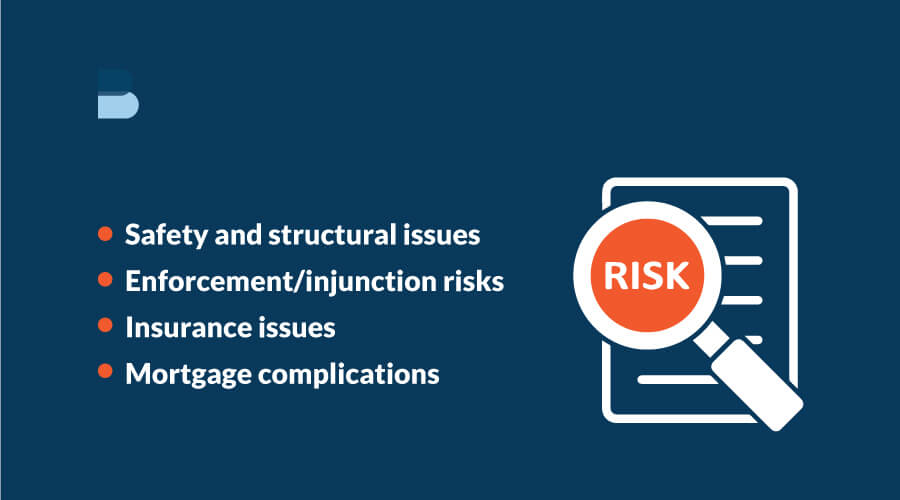
There are a number of risks associated with buying a house without building regulations approval, not only financially and legally, but also from a genuine safety perspective too:
- Safety and structural issues - Without regulations approval, there’s no guarantee that previous work was actually completed using the necessary materials and equipment needed for structural integrity. You may also run into ventilation or fire safety risks.
- Enforcement/injunction risks - Local councils can force you to alter or demolish work if it isn’t compliant, even if you bought the house after it was carried out. This is possible for much older projects too.
- Insurance issues - If an accident occurs or fire breaks out in uncertified areas of the property, it’s likely an insurer may refuse to payout.
- Mortgage complications - Getting a mortgage may be much more difficult as surveyors may flag uncertified extensions or loft conversions, leading the bank to value that part of the house at £0 or refuse the loan entirely.
There are ways to limit or eliminate these risks entirely, such as asking a surveyor to inspect the work upfront, or asking a solicitor to check that work falls under the ‘10-year enforcement window’, allowing you time to get approval.
Can you get a mortgage without building regulations approval?

You can get a mortgage without building regulations approval, but you’ll usually need support and advice from an expert mortgage broker team.
When you buy a house, you’re also taking on responsibility for the compliance history of the property. As a result, you need to understand how lenders will view the risks associated with the house, and how to optimise your mortgage application to increase your chances of success and secure a better deal based on the lack of approval.
When dealing with mortgage applications for properties without regulations approval, you should be prepared for a more difficult process, as well as potential rejections.
What can you do if building regulations approval is missing on a house you want to buy?
If you’ve decided on a property, but come to find that regulations approval is missing on one or more aspects of the building, you should seek help from a financial advisor or a mortgage broker to understand all of your options.
At Barlow Irvin, we’ll take you through potential insurance options (such as indemnity insurance) which would protect against local authority enforcement action. Or, we’ll help you to ask the seller to seek retrospective approval, so you can be sure the building is genuinely safe and fit for purpose.
Either way, contact us today for support.