

An unregistered property is one which isn’t yet recorded in HM Land Registry database. This usually occurs when a property hasn’t been sold or mortgaged since registration became mandatory in 1990.
It is possible to get a mortgage on such properties, but there are usually stricter requirements to meet in order to prove it’s actually a legitimate property.
What is property registration?
Property registration refers to the official registration of a property with HM Land Registry which was made a requirement in 1990. It’s necessary when a property is sold, mortgaged or gifted, though a property might not have been registered if it hasn’t changed hands since 1990.
Can I get a mortgage on an unregistered property?

Yes, you can get a mortgage on an unregistered property, but the process of proving things like legal boundaries, right to sell and any other restrictions can make it a longer and more in-depth process.
The following are the key aspects of getting a mortgage on an unregistered property:
Proof of ownership - Because no electronic record of the property exists, the seller must be able to produce original documentation/deeds to prove ownership.
Conveyancing - Your solicitor or financial advisor will need to perform additional checks, such as a land charges search against all previous owners.
Root of title - The conveyancing process is reliant on documentation which clearly describes the property and its boundaries. In some cases, this may lead to disruption or hitches in the mortgage application process.
Compulsory first registration - Once you complete a purchase on an unregistered property, you will now legally have to register with the Land Registry.
How does a property purchase for unregistered property work?
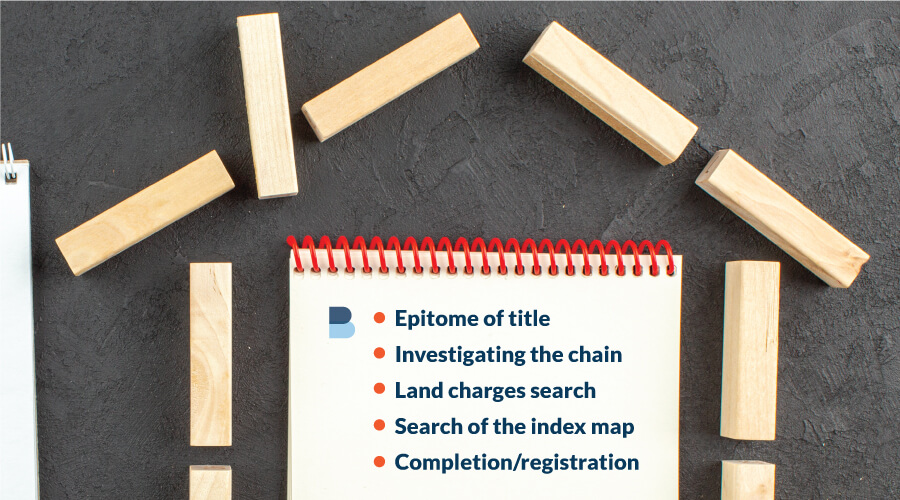
Buying an unregistered property requires a ‘paper-based trail’ to reach a final digital result. Effectively, you’ll need to perform a manual investigation into physical documentation and records to determine current/previous ownership, and potentially uncover other important details about the property.
You’ll usually need the support of a solicitor or advisor to complete the following steps:
- Epitome of title - Because you can’t prove a digital title register, your solicitor will create a document named ‘epitome of title’ which shows the chronology of previous owners of the property.
- Investigating the chain - Your solicitor or advisor will look for a ‘good root of title’ (a deed at least 15 years old), then check every sale, gift or death since the root to ensure the current seller can actually legally sell.
- Land charges search - They’ll need to perform a search against the names of every person who owned the property since 1925, to check whether any of them took out a mortgage on the property that was never paid off, or declared bankruptcy. This is important because it could affect the sale/purchase of the property.
- Search of the index map - You’ll need to submit a SIM (search of index map) to the land registry to confirm that the land hasn’t been registered already and that nobody else is trying to register a claim.
- Completion/registration - Upon completion, you are legally required to register the property.
This is a process which requires a lot of meticulous investigation and an understanding of how to follow these processes properly. That’s why we’d recommend speaking with the Barlow Irvin team to ensure everything is completed correctly.
The risks of buying an unregistered property

A variety of mortgage types are available for buying an unregistered property, but there are certainly some risks which come with this.
The first risk is delays in getting your mortgage because lenders are typically much more cautious with unregistered buildings. They’ll sometimes even require registration before funding is approved, making it a more complex process.
Another risk are hidden covenants and rights of way, which are effectively private agreements regarding what you can and can’t do with the property, or legal rights/agreements people may have to use your land/access your property to some extent. For example, a landlocked neighbour might be legally allowed to use the building’s land to reach theirs, or there may be an agreement written many years ago which states restrictions regarding the height of your fences.
Boundary disputes can also arise as a result of buying an unregistered property. Historical records are often vague and confusing, which can lead to disagreements with neighbours over where your property ends, and where theirs begins.
There are a number of other unique risks such as fraud risks, loss of title deeds and even adverse possession. Each of these issues, and the ones listed above, can be managed and mitigated with the help of the right mortgage broker.
Get in touch with Barlow Irvin today for support and advice regarding your mortgage on an unregistered property.