

The economy has a direct impact on mortgage rates, job markets/security and house prices in general. As a result, if you’re looking at buying a home, it’s vital to have a reasonable understanding of the current economy. This is especially true when buying your first home.
This includes understanding how the economy impacts the housing market, what to look for in the economy when buying, and how a broker can support you with finding the perfect time to buy.
Are people worried about buying a house in the current economy?

Many people are worried about buying a house in the current economy. Buyers are facing a number of hurdles regarding strained affordability, spikes in mortgage rates and general economic anxiety.
It’s important to remember that people are very regularly worried about the economy, as global geopolitical tensions and other factors are generally hard to predict. On top of this, many experts suggest that lesser demand over time means more homes are sitting on the market, and some buyers are in stronger positions to negotiate favourable deals.
Is now a good time to buy a house?
Whether or not it’s a good time to buy a house generally depends on personal finances and how long you plan to live in the property. Whilst it’s important to consider the economy and the property market, timing should still be predominantly based on your own readiness and situation.
How the economy impacts the housing market
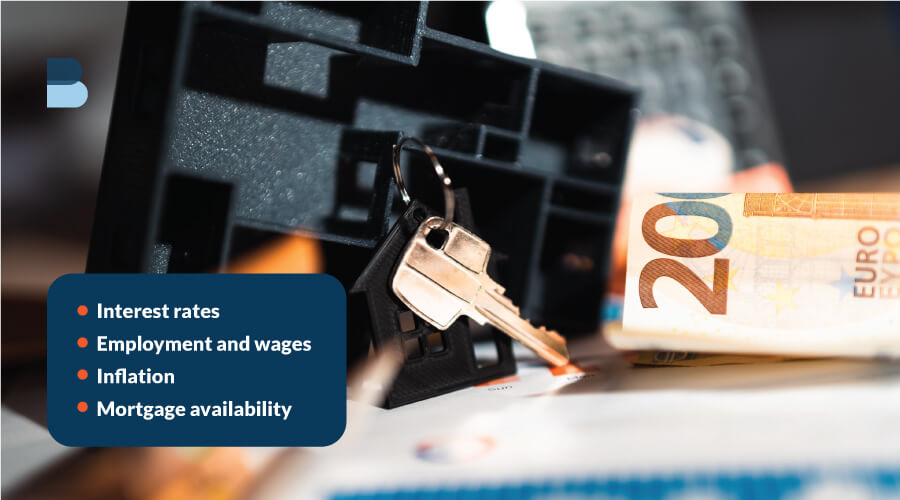
The economy directly impacts the housing market in a number of ways, through interest rates, employment levels, consumer confidence and inflation:
- Interest rates - Inflation is managed by interest rates set by central banks. Lower interest rates mean lower borrowing costs, subsequent cheaper mortgages and increased buyer demand. Higher rates, like those seen following economic shock, increase monthly repayments, slow demand and reduced purchasing power.
- Employment and wages - Securing a mortgage is impossible without a stable job. Employment rates and increasing wages will have a positive impact on buyer confidence. On the other hand, a struggling job market slows the housing market down significantly.
- Inflation - High inflation adversely impacts disposable income and increases the cost of living. As a result, people have less money to spend on a property. On top of this, the ‘real’ value of property decreases if inflation outpaces the growth of house prices.
- Mortgage availability - Economic health can lead to more relaxed lending standards, whilst economic struggles cause lenders to take far less risk.
For more information, check out our dedicated blog ‘Expert Property Market Predictions 2026’.
What to watch out for in the economy when buying a house
When buying a house, you should monitor economic factors such as interest rates, inflation and local employment data.
The base interest rate influences lenders’ rates. If committing to a tracker mortgage, your interest rate will continue to change based on the base rate. You should stress-test your budget to check you’ll still be able to afford repayments if rates rise.
Inflation, particularly to energy, fuel and food costs, make it harder to manage mortgage payments, so keep an eye on the consumer price index to judge trends.
The local job market is also a strong indicator of the local economy, which tends to impact house prices. Rising unemployment is a sign that property values may decrease in the near future.
How a mortgage broker can support you with buying a home at the right time

A local mortgage broker, such as Barlow Irvin, can support you with buying a home at the right time by understanding location-specific factors alongside the national/international economy.
We’ve helped clients navigate stressful and unpredictable economic times since 2013, so we know what to look out for, and we can guide you through the buying process with ongoing support and expertise.
Get in touch with us today for more information.