


Keeping track of the Bank of England base rate can feel like a full time job, especially when it has such a direct impact on your mortgage payments.
This page keeps you covered. We update it every time the Bank of England makes a decision, so you always have the latest rate, history, and a plain English explanation of what it means for you.
Current Bank of England base rate
The Bank of England base rate is currently 3.75%. The Monetary Policy Committee (MPC) held the rate at this level on 17 September 2026, meaning there has been no change since the last cut in December 2025.
The next interest rate decision is due on 5 November 2026, and we will update this page as soon as the announcement is made.
What Is the Bank of England base rate?
The Bank of England base rate, often called the Bank of England interest rate or simply the Bank Rate, is the rate the Bank charges other banks and lenders when they borrow money.
It is one of the main tools the Bank uses to keep inflation under control. When the base rate moves, lenders usually adjust their own mortgage and savings rates to match, which is why one decision can affect homeowners right across the country.
When is the next Bank of England interest rate decision?
The Monetary Policy Committee meets eight times a year to review the base rate, and the dates are published well in advance. The next decision is due on 5 November 2026, followed by 17 December 2026 to close out the year.
Whether the rate moves or stays the same, we will refresh this page on the day of the announcement, so you are never working from out of date information.
Bank of England base rate history
The base rate has moved a great deal over the past few years. It peaked at 5.25% in August 2023 as the Bank worked to bring inflation under control, before a run of cuts brought it down to 5.00% in August 2024, 4.50% in February 2025, and 3.75% by December 2025, where it has held ever since.
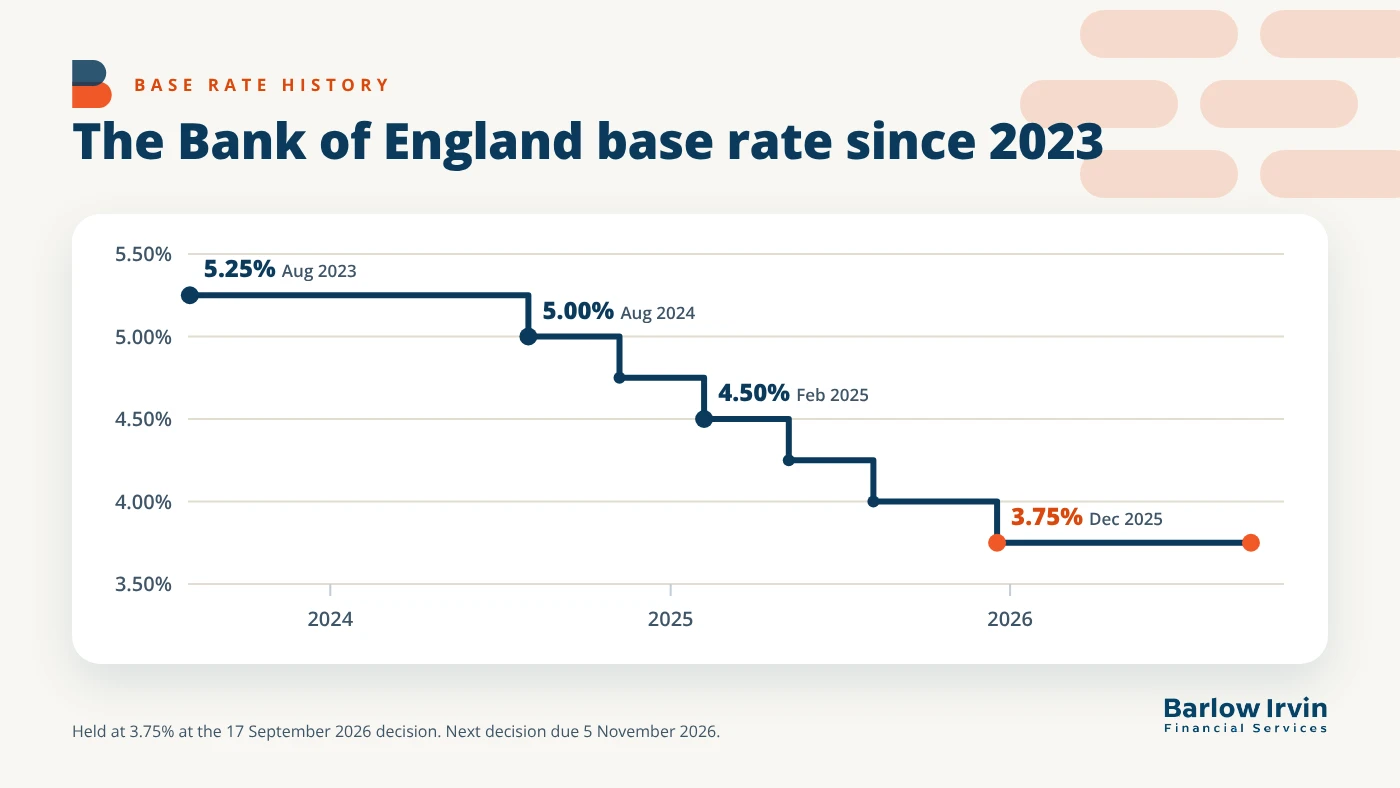
Looking back like this is a good reminder that rates move in cycles, and today’s figure is only ever a snapshot in time.
How the base rate affects your mortgage
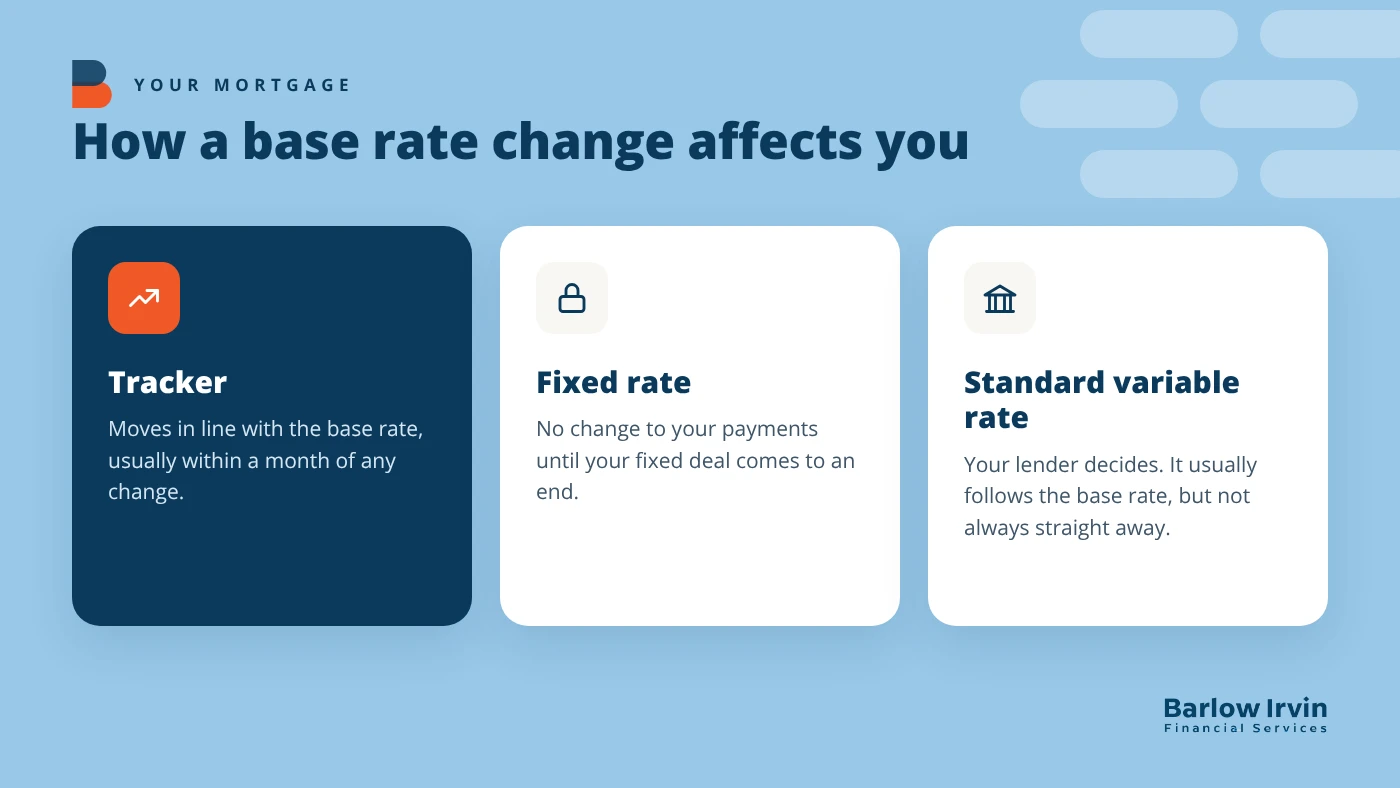
Not every mortgage reacts to a Bank of England base rate change in the same way. How much it affects your monthly payments depends entirely on the type of deal you are on.
Tracker Mortgages
A tracker mortgage moves in line with the base rate, usually within a month of any change. If the base rate is held, as it was in September, your rate and payments stay exactly the same. If you are on a tracker and want to understand your options, our tracker mortgages guide explains how they work in more detail.
Fixed-Rate Mortgages
If you are on a fixed rate mortgage, a base rate hold or change will not touch your current payments at all, since your rate is locked in for the length of your deal. It only starts to matter when your fixed term ends and you come to remortgage. If your deal is coming to an end, our remortgage guide is a good place to start.
Standard Variable Rate (SVR) Mortgages
Standard variable rate mortgages can change whenever your lender chooses, and they usually take their lead from the base rate, though not always immediately or by the same amount. SVRs tend to be more expensive than fixed or tracker deals, so if you have moved onto one, it is worth exploring your options, including discount mortgages, which offer a reduction on your lender’s SVR.
Will the Bank of England Cut or Hold Rates Next?
Predicting the Bank of England’s next move is never an exact science. At the September 2026 meeting, the Bank held rates at 3.75%, with Governor Andrew Bailey noting that while higher global energy costs have had a limited effect on prices and wages so far, continued volatility could mean a rate rise is needed to keep inflation on target. In other words, further cuts are not guaranteed, and a hold or even a small rise are both realistic outcomes over the coming months. We will update this section after every MPC decision. For the bigger picture on the property market, see our property market review.