


Being an executor is a big responsibility, and it often comes at a difficult time. There are forms, deadlines and, for some estates, inheritance tax to pay. This guide explains how probate and inheritance tax work in England and Wales, in plain English.
What Does an Executor Do?
An executor is the person named in a will to deal with someone’s estate after they die. If there’s no will, a close relative usually steps in as the administrator and does the same job. Your main tasks are to:
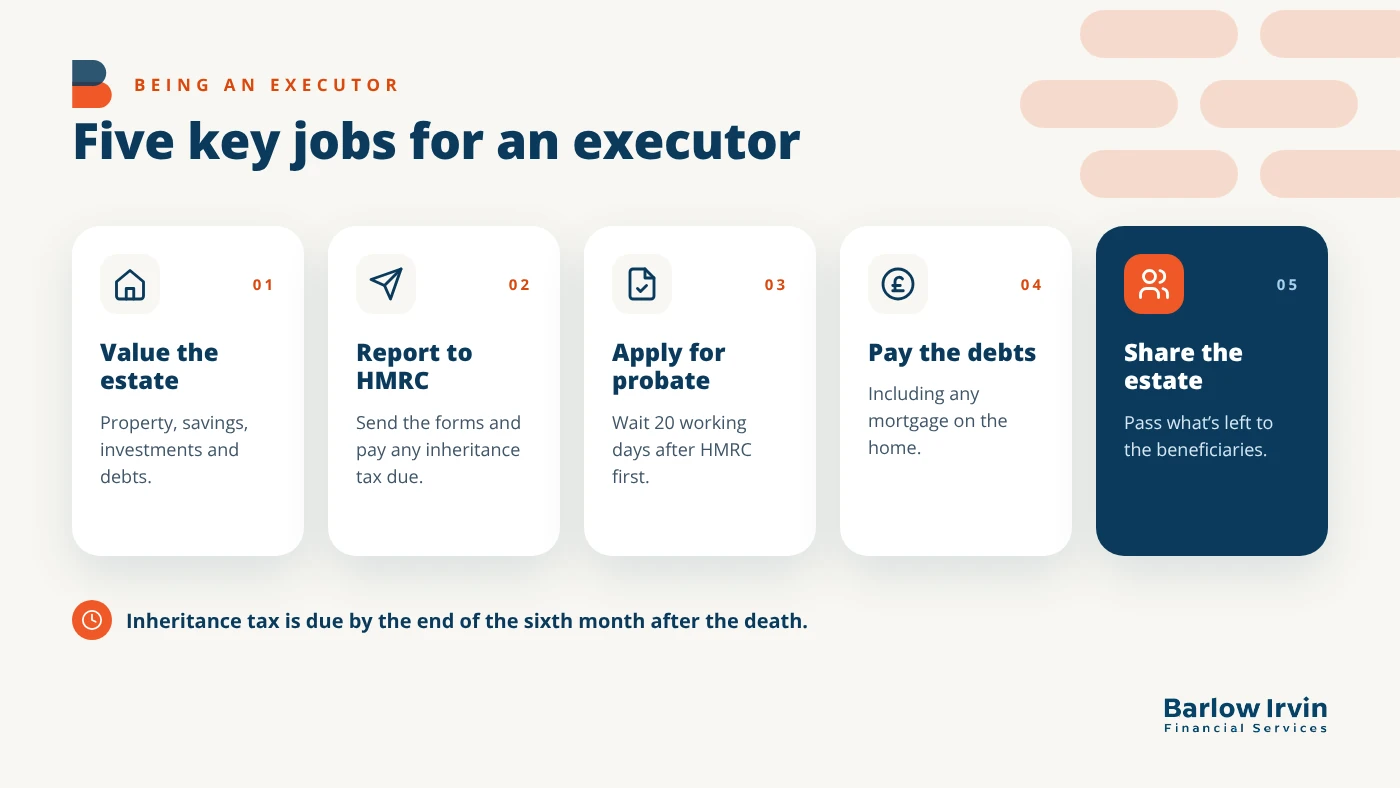
- value the estate, including property, savings, investments and debts
- report the estate to HMRC and pay any inheritance tax due
- apply for probate
- pay off any debts, including a mortgage
- share out what’s left to the beneficiaries
You don’t have to do it alone. Many executors ask a solicitor to handle the legal side.
Do You Need Probate?
Probate gives you the legal right to deal with someone’s estate. You’ll usually need it if the person owned a property in their sole name, or had larger sums in bank accounts, shares or investments.
You may not need probate if everything was owned jointly and passes straight to the surviving owner, or if the estate is very small. Each bank sets its own limit, so check with them first.
How Much Does Probate Cost and How Long Does It Take?
The probate application fee is £526 for estates worth more than £5,000. It rose from £300 in July 2026. Solicitor fees are extra.
Most online applications are processed within a few weeks, but paper applications and more complex estates can take several months. If inheritance tax is due, you’ll need to send your forms to HMRC first and then wait 20 working days before you can apply.
How Inheritance Tax Works
Inheritance tax is charged at 40% on the part of an estate above the tax-free threshold. Everyone has a nil-rate band of £325,000. If the home is left to children or grandchildren, an extra residence nil-rate band of up to £175,000 may also apply.
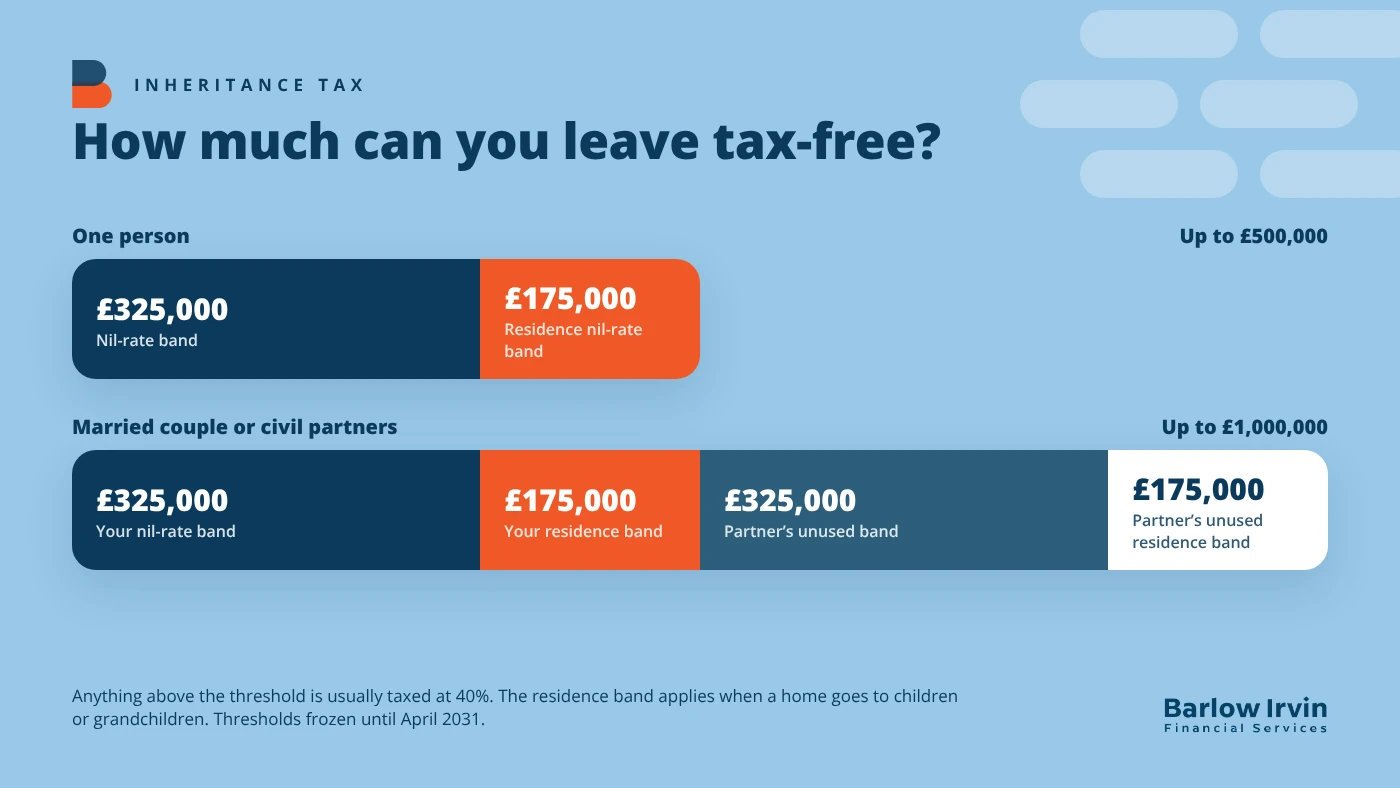
Anything left to a husband, wife or civil partner is usually tax-free, and any unused allowance can pass to them. That means a married couple can often leave up to £1 million without paying any inheritance tax. These thresholds are frozen until April 2031, and from April 2027 most unused pension pots will also count towards the estate.
Most estates don’t pay any inheritance tax at all.
Do You Have to Pay Inheritance Tax Before Probate?
In most cases, yes, at least some of it. Inheritance tax is due by the end of the sixth month after the death, and interest is added after that. HMRC usually needs to receive a payment before probate can be granted, which can be tricky when the money is tied up in the estate.
There are a few ways to manage this. Banks can often pay HMRC directly from the person’s accounts, and tax on property can be paid in ten yearly instalments. Our guide to paying inheritance tax before probate explains your options. If most of the estate’s value is in a house, a probate bridging loan can cover the bill until the property is sold.
What Happens to a Mortgage When Someone Dies?
A mortgage doesn’t disappear when someone dies. It becomes a debt that the estate needs to repay.
If the home was owned jointly, the surviving owner usually takes over the property and the mortgage. If it was in one name, let the lender know as soon as you can. Most lenders give executors time while probate is sorted, although interest keeps building.
From there, the estate might sell the house to clear the balance, or a family member might keep it with a new mortgage in their name. If siblings have inherited together, our guide to buying out a sibling’s share explains how that works.
How Life Insurance Can Help With Inheritance Tax
A life insurance policy written in trust pays out to your loved ones directly, rather than into your estate. That means the payout isn’t counted for inheritance tax, and it can usually be paid without waiting for probate.
Many families use it to cover an inheritance tax bill or clear the mortgage, so nobody has to rush into selling the family home. Find out more about our life insurance and protection advice.
Inheritance Tax and Probate FAQs
Can an executor be a beneficiary?
Yes, and it’s very common for a family member to be both. Just make sure a beneficiary doesn’t also witness the will, as that can cancel their gift.
Is an executor personally liable for inheritance tax?
You aren’t expected to pay the bill from your own money. But you can be held personally responsible if you share out the estate before the tax is fully paid. To protect yourself, ask HMRC for a clearance letter before you make the final payments to beneficiaries.
Speak to Our Team
Dealing with an estate can feel overwhelming. Whether you need a bridging loan, a mortgage to keep the family home or life insurance to protect your own family, our friendly advisers are here to help. Get in touch for a free, no-pressure chat.