

If you’re dealing with a loved one’s estate and there’s a property involved, one of the first questions that comes up is whether you can sell it straight away, or whether you have to wait for probate.
The honest answer sits somewhere in between: you can get started before probate is granted, but there’s a point you can’t get past until the grant is in your hand. This guide sets out exactly what you can and can’t do at each stage, and what to do if you need things to move quickly.
Can You Sell a House Before Probate? The Short Answer
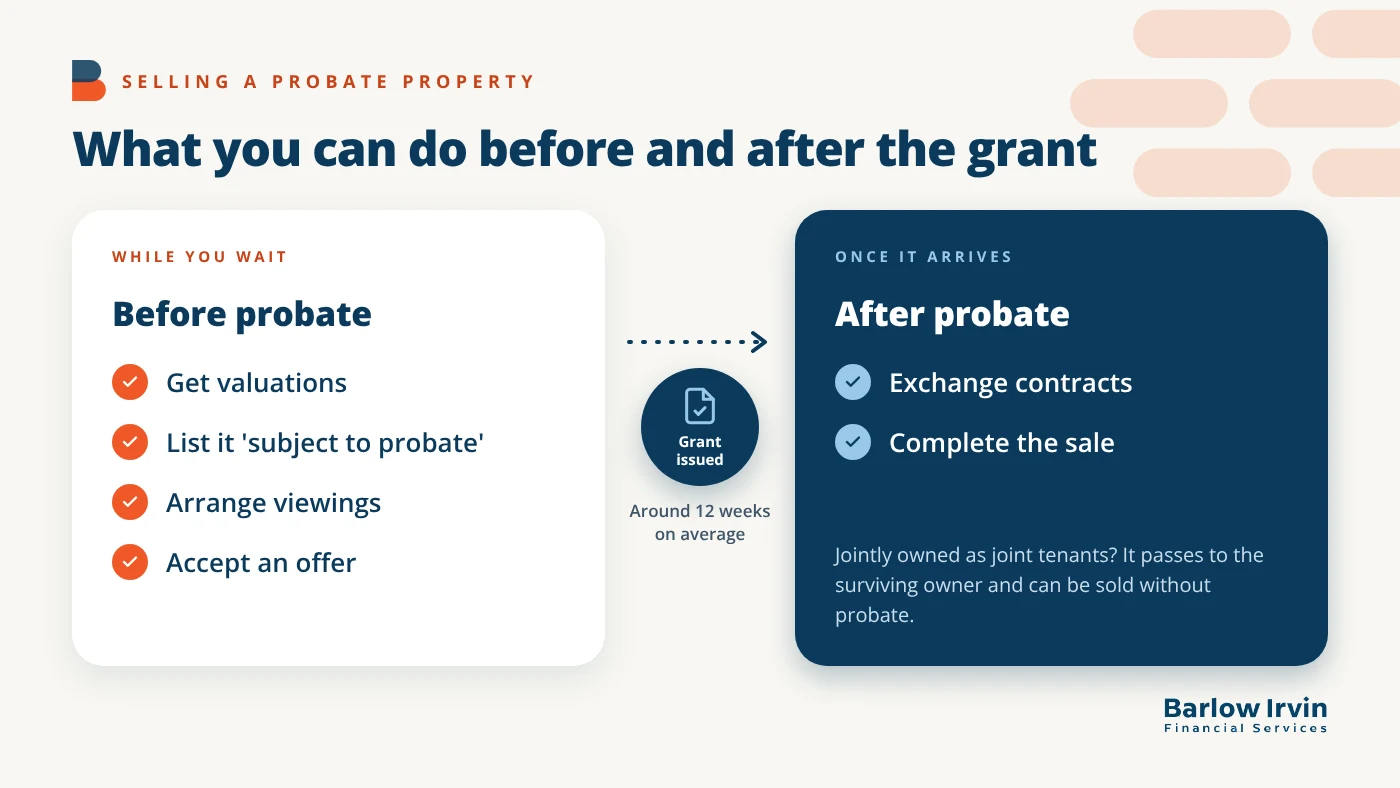
Yes and no, depending on which stage you mean. You can put a property on the market, arrange viewings, get valuations, and even accept an offer before probate is granted. What you can’t do is exchange contracts or complete the sale, because that needs the legal authority a grant of probate gives the executor.
Most estate agents and conveyancers are used to this, and it’s standard practice to market a probate property as ‘for sale, subject to probate’ while the application is in progress. The one exception is a property held as joint tenants, most often between spouses or partners: that passes automatically to the surviving owner and can be sold without probate at all.
Why You Need a Grant of Probate to Complete a Sale
Until the grant of probate is issued, the executor named in the will doesn’t yet have the legal authority to transfer ownership of the property. The grant is essentially the court’s confirmation that they’re allowed to act on the estate’s behalf, and a buyer’s solicitor won’t let a sale complete without seeing it.
That’s why exchange and completion have to wait, even if a buyer is lined up and ready to go. On average, probate takes around 12 weeks, though complex estates or delays at the Probate Registry can push that out to several months.
Selling Before Probate to Cover an Inheritance Tax Bill
Selling the property often comes up because of the inheritance tax bill, since HMRC generally expects payment, or a clear plan to pay, before the grant of probate is issued rather than after.
We’ve covered this in detail in our guide to paying inheritance tax before probate is granted, including the options available if the funds aren’t there yet. It can feel like a catch-22: you may be relying on the sale to cover the bill, but the sale can’t complete until probate comes through, and probate can be harder to move along if the tax hasn’t been paid.
If a short-term bridging loan against the property is the right fit for your circumstances, that’s something we can talk you through, without any pressure to commit before you’ve explored your options.
How to Sell Faster While You Wait for the Grant of Probate
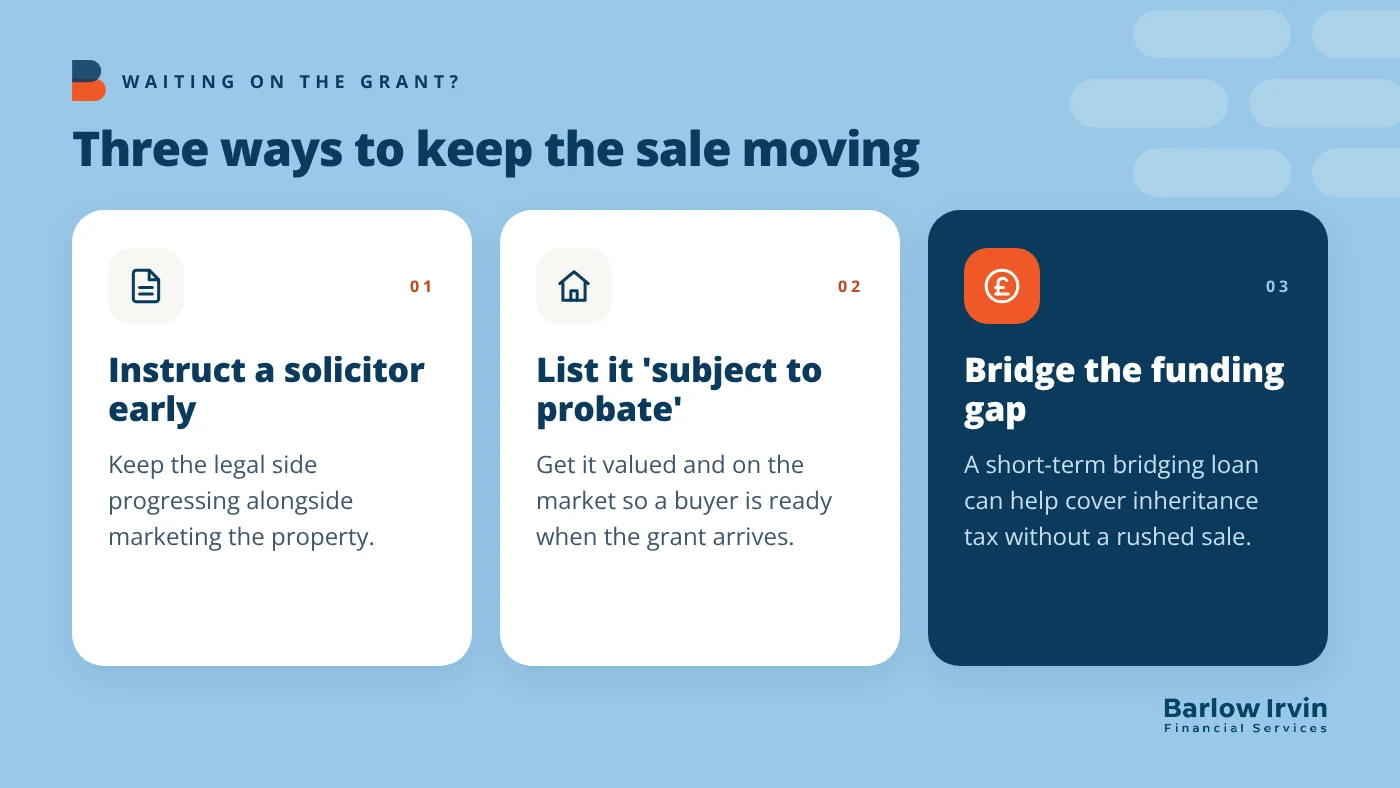
If time matters, a few things help keep it moving. Instructing a solicitor and probate specialist early, rather than waiting until you’re ready to sell, keeps the legal side progressing in parallel with marketing the property. Getting the property valued and listed as “for sale, subject to probate” as soon as you’re able to also means you’re not starting from scratch once the grant comes through.
In genuinely urgent situations, for example where a buyer is at risk of walking away, it’s sometimes possible to ask the Probate Registry to prioritise an application, though this isn’t guaranteed and capacity to fast-track cases is limited. If the hold-up is really about funding, whether that’s the inheritance tax bill or simply needing to release some value from the estate before the sale completes, a short-term bridging loan can bridge the gap without forcing a rushed or discounted sale.
FAQs
Can You Sell a House Without Probate?
If the property was owned as joint tenants, most commonly between a married couple or civil partners, it passes to the surviving owner automatically and can be sold without probate. Otherwise, no: you can market and agree a sale, but you can’t complete it until the grant of probate has been issued.
Do You Need Probate If There Is a Will?
Usually yes, if the estate includes a property or other assets held solely in the deceased’s name. Having a will names who should act as executor and how the estate should be distributed, but it doesn’t remove the need for probate; the executor named in the will still needs the grant to deal with the estate’s assets, including selling a property.
How Much Does Probate Cost?
Costs vary depending on the size and complexity of the estate, but they typically include a court application fee, plus solicitor’s fees if you use one to handle the application. Larger or more complicated estates, or ones involving property abroad or disputes between beneficiaries, tend to cost more to administer.
How Long Does Probate Take Before You Can Complete a Sale?
On average, probate takes around 12 weeks from application to grant, though this can extend to several months for more complex estates or where the Probate Registry is experiencing delays. Marketing the property and lining up a buyer while you wait means you’re ready to exchange and complete as soon as the grant arrives.