


If you have worked out that you need to pay inheritance tax before probate is granted, the next question is usually how to actually get hold of the money. A probate bridging loan is one of the main ways executors and beneficiaries fund an inheritance tax bill, buy out a co-beneficiary, or cover costs while an estate makes its way through probate.
This guide explains what a probate bridging loan is, how it differs from a standard bridging loan, what it can be used for, and what it typically costs.
What is a probate bridging loan?
A probate bridging loan is a short term loan secured against a property that forms part of a deceased person’s estate. Unlike a normal bridging loan, the borrower isn’t a homeowner raising money against their own property. It’s usually the executor or personal representative, borrowing on behalf of the estate to release funds before probate has fully cleared.
This matters because the estate’s own bank accounts and investments are usually frozen until the grant of probate comes through. If there’s an inheritance tax bill to pay, or the estate needs cash for another reason, a probate bridging loan gives access to funds without waiting for the full process to complete.
Learn More About Bridging Loans
How is it different from a standard bridging loan?
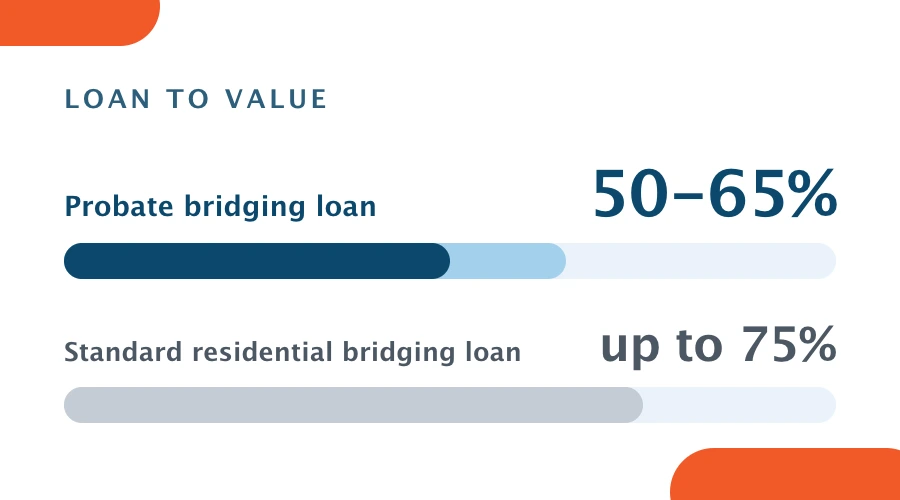
If you already understand how bridging loans work in general, a probate bridging loan follows the same basic principle, but with a few important differences. Lenders typically offer a lower loan to value on probate cases, often in the region of 50-65%, compared with up to 75% on a standard residential bridging loan.
The property itself also stays legally owned by the estate until the grant of probate is issued, rather than by an individual homeowner, and lenders will usually want personal guarantees from the executors alongside close coordination with the estate’s solicitor. Most probate bridging loans are unregulated, since they’re arranged for the estate’s purposes rather than for a beneficiary to live in the property. Where a beneficiary does intend to occupy it, the loan may fall under FCA regulation instead.
What can a probate bridging loan be used for?
Probate bridging finance tends to come up for a handful of specific reasons. The most common is paying an inheritance tax bill, since HMRC generally expects payment before the grant of probate is issued, which can leave executors needing to raise funds before they have legal access to the estate’s assets.
The second is buying out a co-beneficiary. When a property is left to more than one person and only one wants to keep it, a probate bridging loan lets them raise the funds to pay the others their share, rather than being forced to sell. The third is covering costs while the estate is being administered, such as essential maintenance or repairs, so the property doesn’t fall into disrepair or need a rushed, discounted sale.

How much can you borrow, and what does it cost?
Most lenders will advance around 50-65% of the property’s open market value, based on a formal valuation. Interest is usually rolled up or retained rather than paid monthly, meaning it’s added to the loan and settled in full when the property is sold or the estate is able to refinance. On top of the interest, expect an arrangement fee of around 1-2% of the loan amount, plus legal and valuation costs.
Terms are typically shorter than a standard mortgage, often somewhere between 6 and 18 months, with the loan expected to be repaid once the property is sold or the estate has enough liquid funds available. Every lender’s rates and criteria differ, so it’s worth getting a specific quote for your situation rather than relying on general figures.
Pros and cons of a probate bridging loan
On the plus side, a probate bridging loan can be arranged quickly compared with other forms of finance, which matters when there’s a deadline for paying inheritance tax. It also means the estate isn’t forced into a rushed sale just to raise cash, and because the loan is secured against the property rather than the executor’s personal income, approval doesn’t usually depend on personal credit history or earnings.
On the other side, probate bridging finance tends to cost more than a standard mortgage, and if the estate takes longer than expected to sell the property or settle, the rolled-up interest keeps building, which can eat into what beneficiaries eventually receive. Executors also usually need to give a personal guarantee, so it’s worth being clear on what that means before going ahead. As with any borrowing decision on behalf of an estate, it’s worth weighing it up against the alternatives and taking advice where needed.
FAQs
What is a probate loan?
“Probate loan” is another name for the same type of finance. It’s used interchangeably with “probate bridging loan” to describe short term borrowing secured against an estate’s property while probate is being sorted out.
Can I get a loan on a house that's in probate?
Yes. The executor or personal representative can use their authority over the estate to secure a loan against a property that’s still going through probate, even though the grant hasn’t been issued yet. Lenders who specialise in this area understand the process and can usually work alongside your solicitor. The loan to value offered tends to be lower than on a standard bridging loan, reflecting the extra complexity involved.
Who can apply for a probate bridging loan?
It’s normally the executor or personal representative named in the will, or the administrator appointed where there isn’t a will, since they’re the one with legal authority to act on the estate’s behalf. In some cases, such as buying out a co-beneficiary, a beneficiary can also apply in their own right, using the property they’re due to inherit as security.
Is a probate bridging loan regulated?
Most probate bridging loans are unregulated, because they’re arranged for the estate’s purposes rather than for a beneficiary’s own home. If a beneficiary intends to live in the property, the loan may then fall under FCA regulation, so it’s worth checking this early with your lender or broker.
Speak to us about your probate bridging finance and we’ll talk you through your options.
Get in Touch to Discuss Your Options
As an FCA approved, whole-of-market broker, Barlow Irvin is able to compare products from a range of lenders, including specialist lenders, helping you find the best possible mortgage.