


Inheriting a family home with your brothers or sisters can bring up a lot of emotions, and a few practical questions too. If you’d love to keep the property but your siblings would rather have their share in cash, buying them out can be a great solution. Here’s how it works and how to fund it.
How Is Inherited Property Split Between Siblings?
How the property is split depends on the will. It’s often left in equal shares, but a will can set out whatever split the person chose. If there’s no will, the intestacy rules decide who inherits, and children usually share equally where there’s no surviving spouse or civil partner.
Until the estate is settled, the executor (or administrator, if there’s no will) is responsible for the property. Once it’s passed on, siblings often own it together as tenants in common, which means each of you owns a set share that can be sold. That’s what makes a buyout possible: you buy your siblings’ shares so the property ends up in your name alone.
How to Buy Out a Sibling
Every family is different, but most buyouts follow the same few steps:
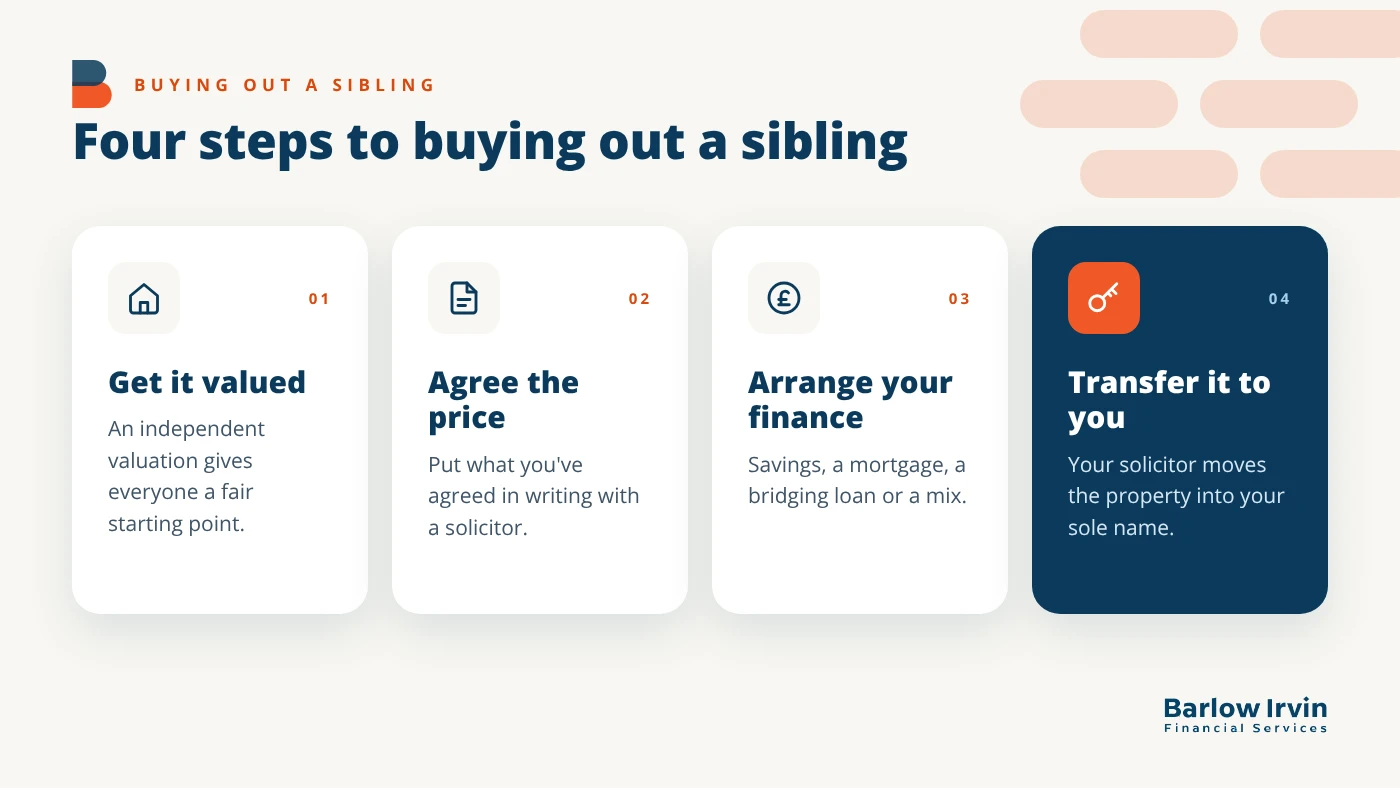
- Get the property valued. An independent valuation from a RICS surveyor gives everyone a fair starting point and helps avoid disagreements later on.
- Agree on a price and put it in writing. You might pay each sibling their share of the valuation, or agree to a different figure between you. Either way, ask a solicitor to record what’s been agreed.
- Arrange your finances. Work out how you’ll pay, whether that’s from savings, a mortgage, a bridging loan or a mix.
- Transfer the property into your name. Your solicitor handles the legal transfer and updates the Land Registry, usually on the same day your funds are released.
Buying Out a Sibling Before or After Probate
The executor needs a grant of probate before the property can legally change hands. You don’t have to wait to get started, though. You can agree the price, line up your finance and have your solicitor ready to go while probate is being sorted.
If the property hasn’t been passed on yet, the executor can transfer it straight to you as part of your inheritance, with you paying your siblings the difference. If it’s already in all of your names, it becomes a transfer of equity into your sole name instead. You can read more about timings in our guide to selling a house before probate is granted.
Any inheritance tax usually needs to be paid before probate is granted, which can hold things up. Find out more in our guide on paying inheritance tax before probate.
How to Fund a Sibling Buyout
Savings are the simplest option, but for most people borrowing is part of the picture.
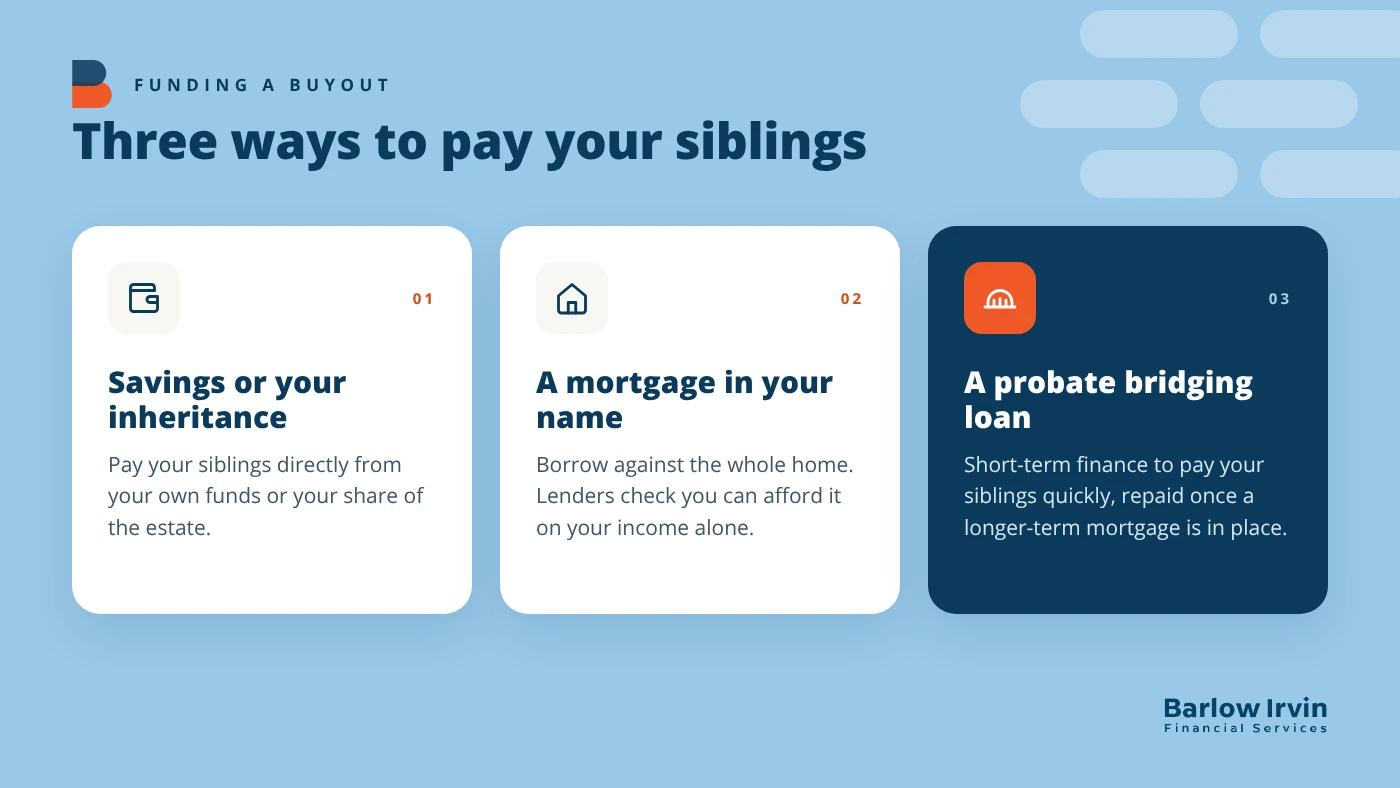
A mortgage in your sole name is the most common route. The lender will check whether you can afford the whole property on your own income, and some lenders may let you use the equity in your inherited share towards your deposit. If there’s already a mortgage on the property, remortgaging could release the funds you need. Planning to rent the property out rather than live in it? You’ll need a buy to let mortgage, where the expected rent plays a big part in how much you can borrow.
If your siblings would like to be paid quickly, or probate is dragging on, a probate bridging loan can cover the gap. It’s short-term borrowing secured against the property, which you then pay off with a longer-term mortgage once everything is in place. Our guide on how probate bridging loans work explains it step by step, or you can read more about how bridging loans work in general.
Inherited property can be more complex than a standard purchase, so it’s worth speaking to a mortgage broker who knows which lenders suit these cases.
Stamp Duty and Capital Gains Tax When Buying Out a Sibling
In England and Northern Ireland, stamp duty is worked out on the amount you pay your siblings, not the full value of the house. If that figure is under the £125,000 threshold, there may be nothing to pay. If you’re keeping your current home as well, the higher rates for additional properties could apply, so check this early.
Your siblings may need to pay capital gains tax on the share they sell. This is based on any rise in value since the date of death, so if you buy them out fairly soon after probate, the gain is often small. If there is tax to pay, it must be reported and paid to HMRC within 60 days of completion.
It’s always worth getting advice from a solicitor or accountant before you agree on a price.
What If Your Siblings Can’t Agree?
Siblings don’t always agree on the price, the timing or whether to sell at all. Mediation can help everyone find some middle ground without the cost and stress of going to court. As a last resort, a co-owner can ask the court to order a sale, but most families find a way to agree long before it gets to that point.
If you’re thinking about buying out a sibling, we’d love to help. Get in touch with the Barlow Irvin team for friendly, no-pressure advice on the best way to fund it.