


Changing interest rates can have a significant impact on your mortgage, either immediately or further down the line if you intend to switch your mortgage plan one day. Understanding mortgage rates is crucial to secure the best possible deal on your loan.
In this blog, we’re going to dive into mortgage interest rates, what they currently are, and how they’re determined. We will also look at ways to potentially reduce mortgage interest rates too.
What is a mortgage interest rate?

Put simply, a mortgage interest rate is the percentage amount a lender charges you for borrowing money to buy your home. It’s how lenders make their money, and it’s also why they’re able to offer you such big loans.
Mortgage rates can vary based on a plethora of factors, such as your credit score, deposit size, mortgage type, and even the individual lender.
What are UK interest rates currently (Bank of England base rate)?
Whilst interest rates vary based on a number of factors, the best rates in the UK at the moment are generally around the 3%-4% mark for fixed rate deals, which was influenced by the ‘Bank of England Base Rate’ being lowered to 3.75% in December 2025.
How is the base rate decided?
The Bank of England base rate is set by the ‘Monetary Policy Committee (MPC)’, designed to meet the target inflation rate of the government. The MPC holds meetings eight times a year to discuss economic conditions and set a rate accordingly.
What to expect when the Bank of England base rate changes
As a borrower, mortgage rates will shift quickly if you’re on variable interest rates or tracker rates. These rates may shift either in your favour or against you based on whether the base rate increases or decreases.
For fixed rate mortgages, you may feel a delayed impact if and when you switch your mortgage deal.
How will interest rate changes affect your mortgage?
It’s important to understand how changing interest rates will affect your mortgage. Below, we’ll explain how your rates will change for fixed rate, variable and tracker mortgage types.
Fixed Rate mortgages
With a change in interest rates as a fixed-rate customer, your monthly payments and interest rates will remain the same, regardless of changing base rates.
However, when the agreed term ends, you’ll likely move onto your lender’s standard variable rate, which would mean you’ll then be faced with higher interest rates if the market has increased.
Variable/Tracker mortgages
Tracker mortgages are directly tied to the Bank of England base rate, so your mortgage rate payments will change quickly when the base rate does.
Standard variable rates are set by the lender, but are often influenced by changes in the base rate. If they are affected by changing base rates, there will likely be a slight lag regarding when your rate changes.
How to reduce your mortgage interest rate
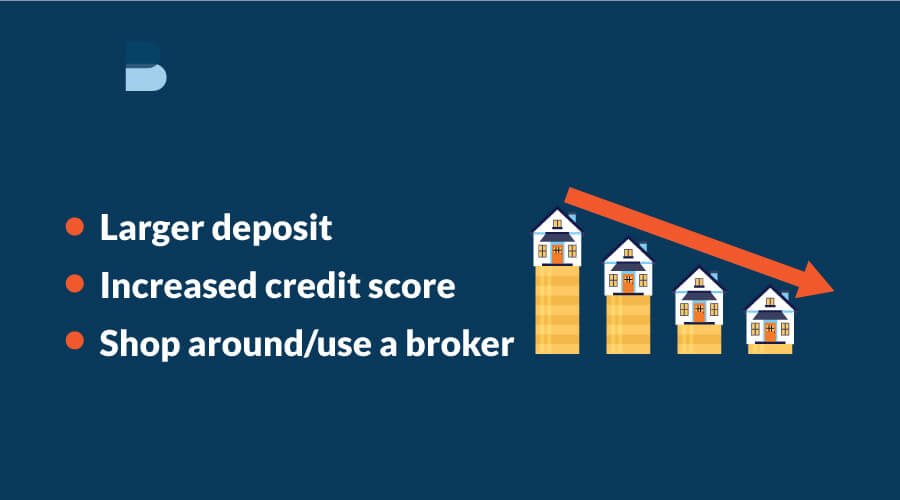
Whilst mortgage interest rates may inevitably fluctuate based on base rates and other factors. There are many things you can do to reduce your mortgage rate:
- Larger deposit – Saving up a larger down-payment on your mortgage is likely to lower interest rates. This is because lenders see you as lower risk, given that you’ve already managed to save a large sum of money.
- Increased credit score – Mortgage credit checks directly impact rates. Working on your credit score before applying for a mortgage is another factor which lowers rates.
- Shop around/use a broker – Shopping around for the most suitable deals is the best way to find low rates. Using a trusted broker may also help to find the perfect deal and save money in the long run.
Get in contact with Barlow Irvin to discuss mortgage rates, and how to secure your dream home for the best possible price.
FAQs about mortgages and interest rates
How are new monthly payments calculated when the interest rate changes?
When interest rates change, monthly payments are typically recalculated based on the amount of outstanding loan, the new interest rate, and your remaining mortgage term.
Will your mortgage change if it is on a fixed rate and interest rates change?
Your fixed rate mortgage will not change if interest rates change, with this lasting for the length of your agreed fixed term.
When the agreed term for your fixed rate ends, you’ll usually move to the standard variable rate of your lender.
What can you do if interest rates drop after you secured a mortgage deal?
If interest rates drop after you secured a mortgage deal, you can usually switch to a new, lower deal. However, lenders have varying policies regarding early repayment charges and deal cancellations. Speaking to your lender or a trusted broker is the best way to understand your options.