


The process of getting a mortgage on a listed building or graded property can be slightly more complicated than on a standard property. This is because many lenders regard them as ‘higher risk’ buildings in a number of ways.
A properties’ grading classification (of which there are 3 tiers) and overall condition will impact your mortgage options. Learn more about mortgages on listed buildings with the support of an experienced local lender.
What is a listed building?
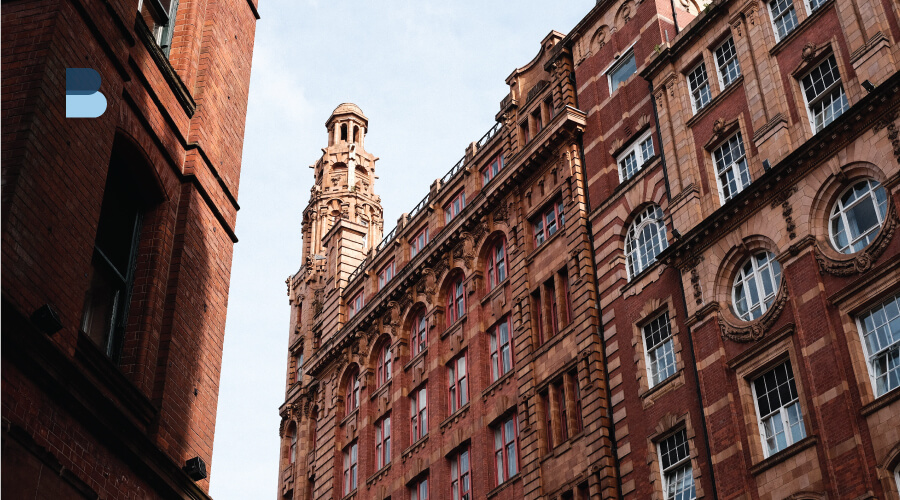
A listed building is a structure recognised for its special architectural or historic interest. These buildings are placed on a national statutory register, so it receives legal protection to ensure these interests are preserved.
As a result, routine maintenance tasks and major renovations usually require formal listed building consent from the local planning authority before they can be carried out. Failure to gain this authorisation may be a criminal offence. Almost any type of building can become ‘listed’.
Can you get a mortgage on a listed building/graded property
Yes, you can get a mortgage on a listed or graded building, but it may be more difficult and complicated than standard mortgage types. Generally, you may have a smaller range of lenders to choose from, and experience more difficulties during the application process.
On top of this, deposits for listed properties are often higher to account for the increased risk for lenders.
How lenders assess the listed building grades
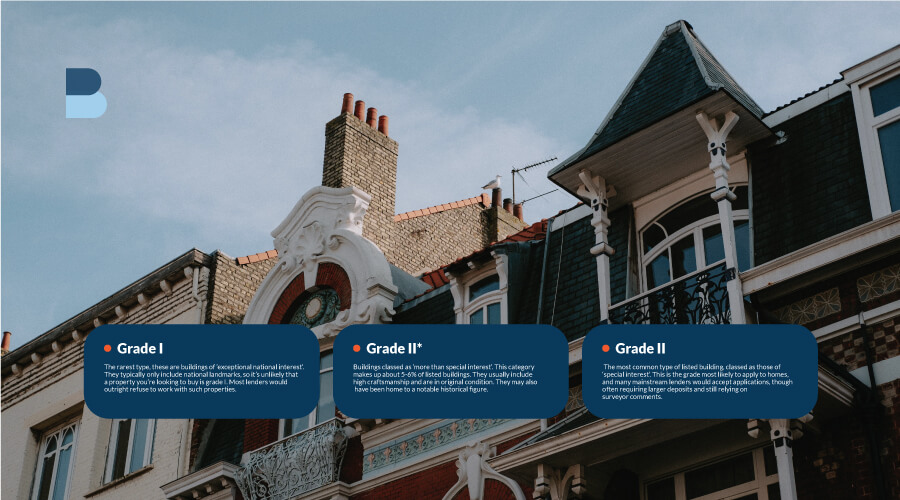
Lenders assess listed building grades based on numerous factors such as heritage status, maintenance costs and restrictions on alterations. Listed buildings are separated into 3 main ‘grades’:
Grade I - The rarest type, these are buildings of ‘exceptional national interest’. They typically only include national landmarks, so it’s unlikely that a property you’re looking to buy is grade I. Most lenders would outright refuse to work with such properties.
Grade II* - Buildings classed as ‘more than special interest’. This category makes up about 5-6% of listed buildings. They usually include high craftsmanship and are in original condition. They may also have been home to a notable historical figure. Fewer mainstream lenders would want to get involved with such properties, but there are options out there. Bear in mind that borrowing will require detailed specialist surveys, low LTV ratios and stricter checks on previous work.
Grade II - The most common type of listed building, classed as those of ‘special interest’. This is the grade most likely to apply to homes, and many mainstream lenders would accept applications, though often requiring larger deposits and still relying on surveyor comments.
Common issues when getting a mortgage on a listed property
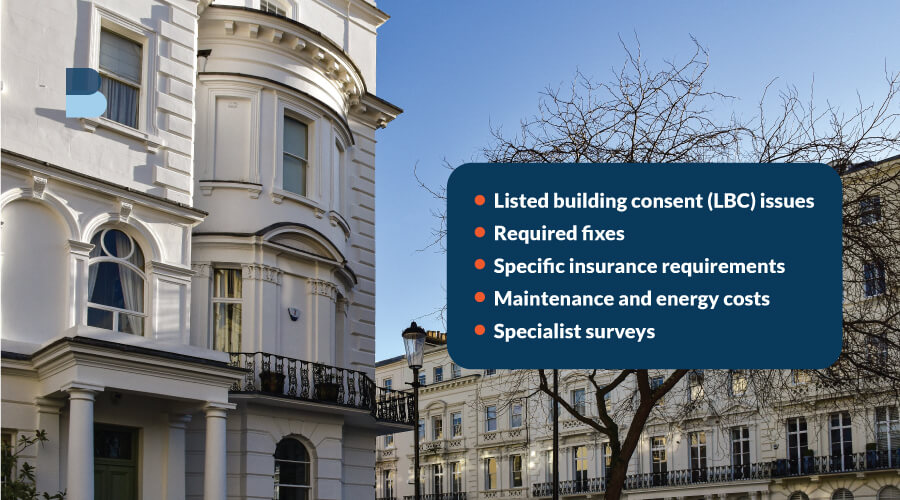
- There are a number of issues which may commonly arise when you try to secure a mortgage on a listed property. Most lenders will stipulate strict surveys, higher deposits and demand certain insurance types:
Listed building consent (LBC) issues - If previous owners altered the property without LBC, you may take on total legal responsibility for undoing this work. As a result, most lenders will decline the mortgage unless this issue is resolved.
Required fixes - Standard surveyors may flag elements of the property which need fixing using modern techniques which conservation officers end up rejecting. This creates a conflict between lender demands and conservation law.
Specific insurance requirements - Listed buildings need specific types of insurance because they usually require traditional repair methods and materials. Lenders will require proof of specialised insurance.
Maintenance and energy costs - Historic buildings generally cost more to run and maintain. As a result, stricter affordability tests are often implemented.
Specialist surveys - Generic homebuyer reports are often rejected on listed properties. Instead, you’ll likely need a chartered surveyor with experience around such properties. This is more costly and time-consuming.
The best way to navigate these issues is by working with a team of experienced local mortgage experts.
Mortgage types for listed properties
There are still a number of mortgage types available for listed properties, which vary depending on the condition of your property and your plans for it.
For most grade II properties in good structural condition, standard residential mortgages are available from some lenders, though they will still require specialist surveys.
Specialist lenders may offer specialist heritage mortgages which are specifically designed for historic properties. These lenders must understand the unique maintenance requirements and costs of such buildings.
Many historic properties may be in need of renovation work. Mortgages known as renovation mortgages release funds in stages, covering the purchase price and subsequent repair and project costs.
Buy-to-let mortgages are available for investors looking to rent listed properties out. Lenders will stress-test their application against the higher upkeep and regulatory costs associated with listed buildings.
To secure a mortgage on a listed/graded property, working with Barlow Irvin is your best option. We’re a whole of market broker with access to multiple specialist lenders, meaning we can find the most suitable lender and the best possible deal for your situation. |