

If you’re thinking about buying, moving or remortgaging, it helps to know what’s going on in the UK property market. The news can be confusing, with one headline saying prices are falling and the next saying they’re rising. So we’ve pulled together the latest figures and explained them in plain English.
What’s happening in the UK property market right now?
The UK housing market is steady but slow this autumn. Prices are broadly flat, more homes are for sale, and buyers are taking their time.
Buyer interest is holding up. Zoopla says home searches are 7% higher than a year ago, and the South East and East of England saw the biggest jump after the summer lull. But fewer of those searches are becoming sales. Sales agreed are 6% lower than this time last year.
The main reason is affordability. Mortgage rates rose this year, so buyers can borrow less for the same monthly payment. At the same time, there are 5% more homes on the market than a year ago. Buyers have more choice and more room to negotiate.
In short, the current housing market in the UK favours buyers more than it has for a while. Sellers who price realistically are still finding buyers.
Are house prices going up or down?
It depends on which report you read, which is why the headlines often seem to contradict each other. Each index measures something slightly different. Some use mortgage approvals, some use asking prices and some use completed sales. Here’s the latest picture:
| Source | Average price | Annual change |
|---|---|---|
| ONS / Land Registry (June) | £272,188 | +2.0% |
| Nationwide (August) | £275,465 | +1.6% |
| Zoopla (August) | £272,800 | +0.9% |
| Halifax (August) | £298,468 | -0.4% |
| Rightmove asking prices (August) | £364,999 | -1.0% |
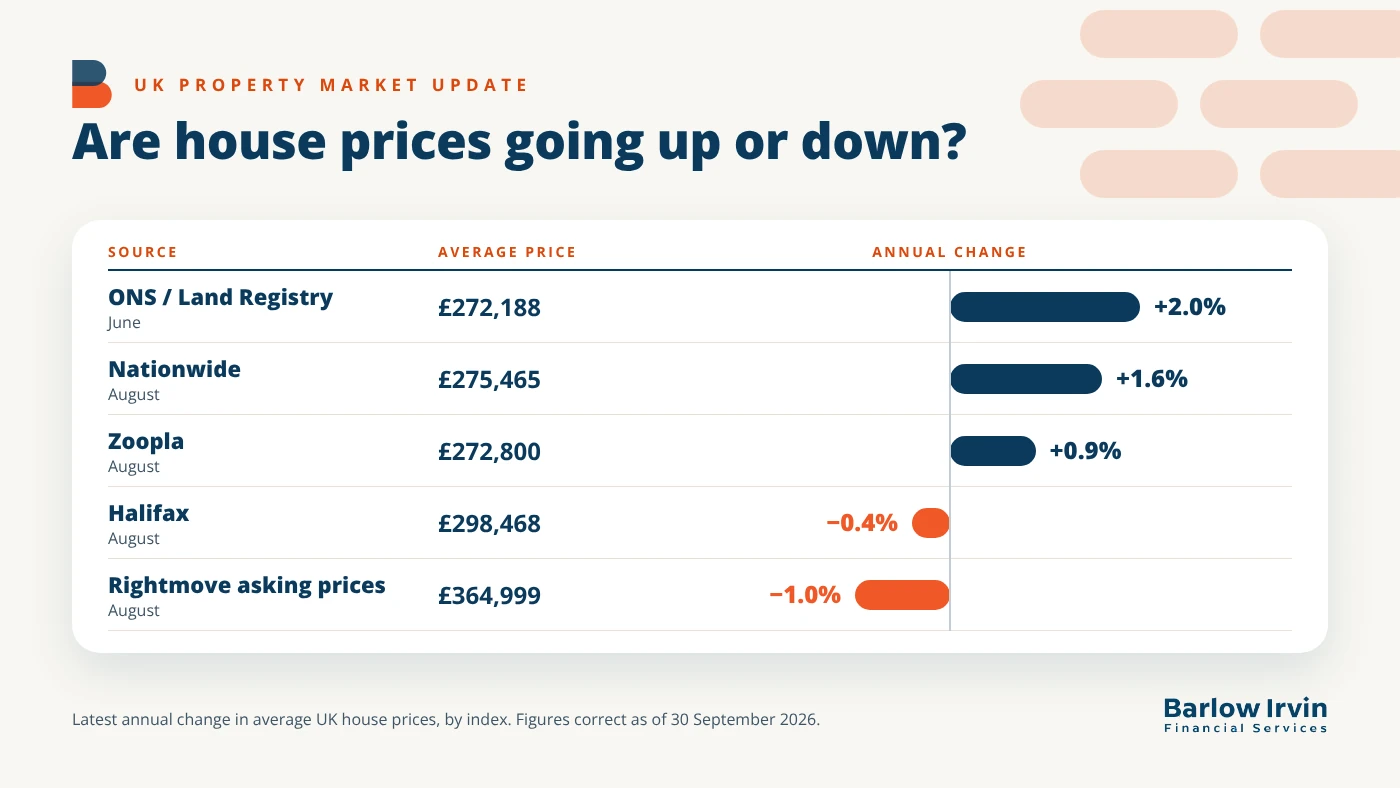
So, are house prices going down? A little, on some measures. Halifax recorded its first annual fall since late 2023, and Rightmove says asking prices dropped 2% in August. Other indices still show small rises. Overall, UK house prices are flat rather than falling sharply.
Where you live matters too. Prices are holding up well in the north, and the North West leads with growth of 3.1%. In the south, prices have stalled, and London is down around 1% on last year.
What about a housing market crash? There’s no sign of one. Most forecasters expect annual price growth to slow to around 1% by the end of the year, not a steep drop. Plenty of homes for sale, sensible pricing and steady demand usually mean a slower market, not a crash. UK housing market predictions for 2027 depend mainly on where mortgage rates go next.
Will mortgage rates go down?
This is the question we hear most often. The Bank of England base rate is currently 3.75%, well below its 5.25% peak in 2024. But mortgage rates don’t follow the base rate exactly. They also depend on what lenders expect to happen with inflation and the wider economy.
Average mortgage rates rose from under 4% in January to around 4.8% now. Higher energy prices, partly driven by tension in the Middle East, have kept inflation worries alive. The Bank of England has warned that rates could stay higher for longer.
In practice, that makes a big difference. According to Zoopla, a buyer who could afford a £200,000 mortgage at the start of the year can now borrow around £182,000 for the same monthly payment.
Will mortgage rates go down in 2027? They may ease if inflation settles, but nobody can say for sure. Rather than waiting for the perfect moment, it’s usually better to find the right deal for your situation now. You can compare today’s mortgage rates with an adviser to see what you could get.
The new “Your First Home” scheme explained
On 26 September, the government announced a new scheme to help first-time buyers in England get onto the property ladder. It’s called Your First Home, and it works like this:
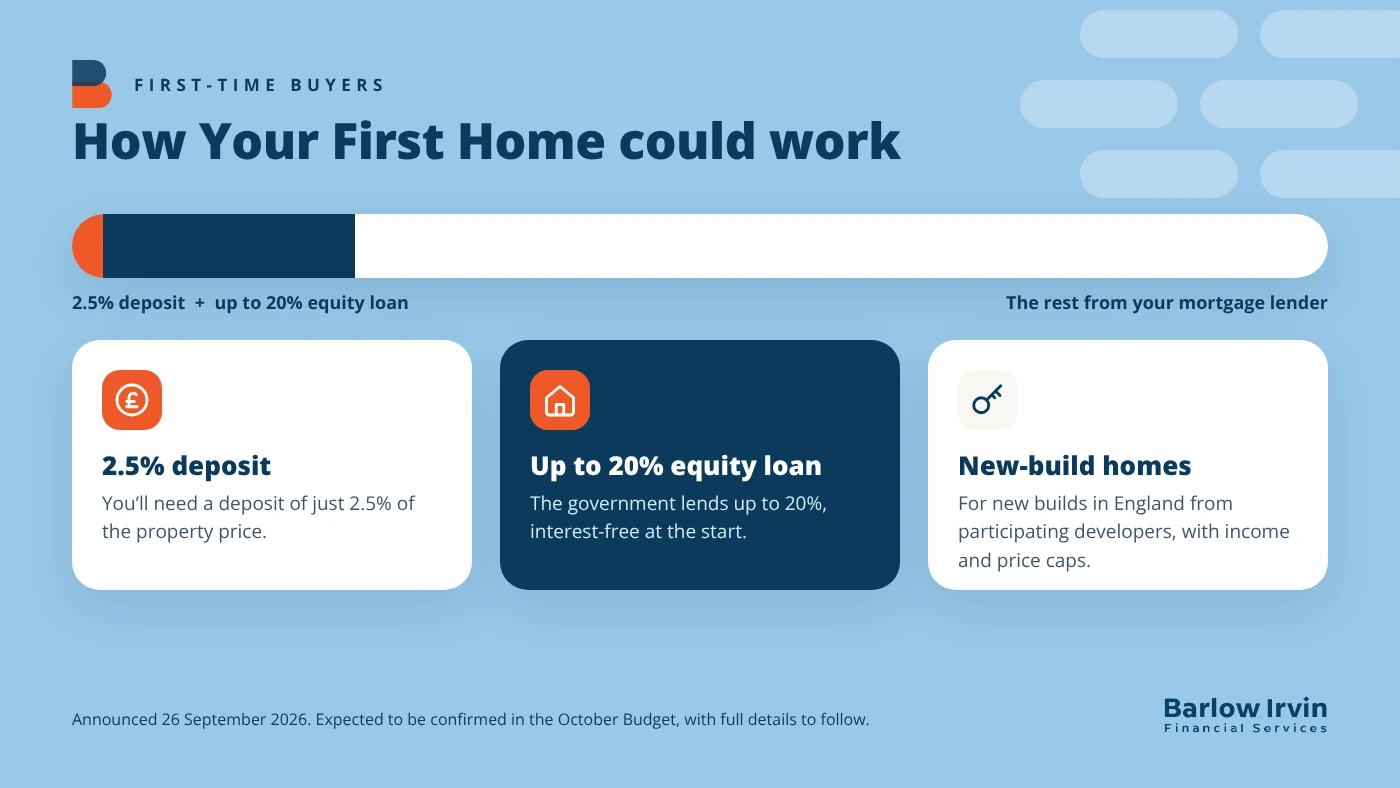
- You’ll need a deposit of just 2.5%
- The government lends you up to 20% of the property price as an equity loan, interest-free at the start
- It’s for new-build homes from participating developers
- There will be household income caps and local property price caps
Because the equity loan covers part of the price, you borrow less from your lender. That could mean lower monthly payments than a standard 95% mortgage.
The scheme is expected to be confirmed in the October Budget, with the full details, including the income and price caps, to follow. We’ll update this page as soon as we know more.
What this means for buyers and remortgagers
First-time buyers: A slower market can work in your favour. With more homes to choose from and less competition, you may be able to negotiate on price. If you’re buying a new build in England, Your First Home could make a smaller deposit possible. Our guide to first-time buyer mortgages explains how the process works, step by step.
Home movers: If you’re selling and buying, a flat market often balances out. You might get a little less for your home, but you can also negotiate on your next one. Pricing your home realistically from day one is the best way to avoid it sitting on the market. Find out more about mortgages for moving home.
Remortgaging: If your fixed rate ends in the next six months, now is a good time to start planning. Many lenders let you secure a new rate months ahead, so you’re protected if rates rise, and a broker can often switch you if rates fall before completion. Here’s how remortgaging with Barlow Irvin works.
Is it a good time to buy a house?
There’s rarely a perfect time to buy. The best time is when it suits your life and your budget. Right now, buyers have more choice and more negotiating power than they’ve had for a while. Mortgage rates are higher than at the start of the year, but still well below their 2023 and 2024 peaks.
If you’re asking whether it’s a good time to buy a house, it’s worth asking a few other questions first. How long do you plan to stay? Can you comfortably afford the monthly payments? Is your deposit ready? If the answers are yes, waiting for the market to “turn” could mean missing the right home.
That’s where we can help. Our friendly advisers search the whole market to find a mortgage that fits you, and we’ll explain everything in plain English along the way. Book a free mortgage consultation and we’ll help you make sense of what the UK property market means for you.
Figures correct as of 30 September 2026. Your home may be repossessed if you do not keep up repayments on your mortgage.